Project Planners are frequently required to submit a “Look Ahead Schedule” to the Project team especially when the Project is running late. Also, when a Consultant comes on board with the hope of saving the Project.
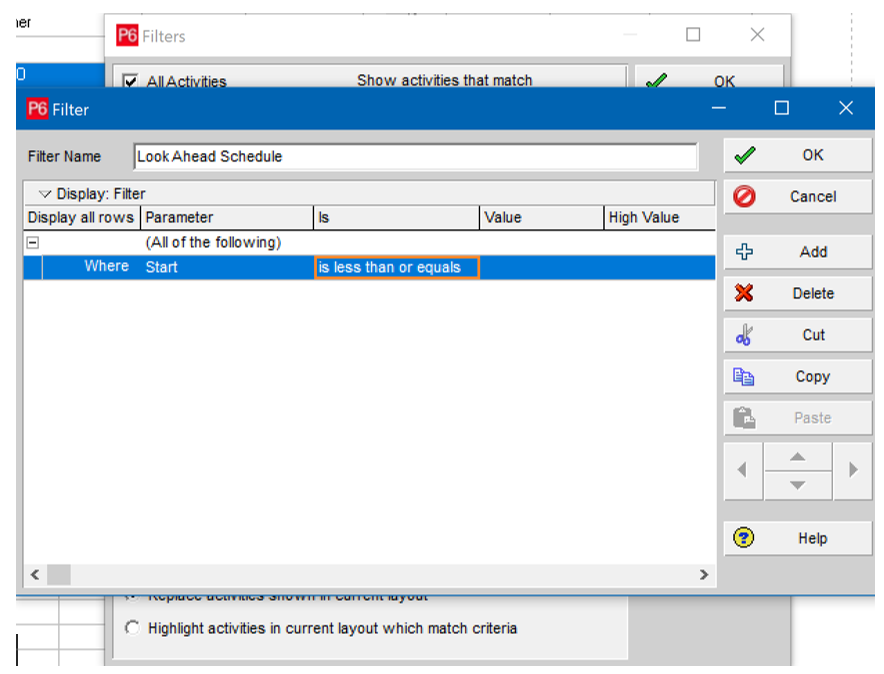
Theoretically, the project team should work on current activities while simultaneously preparing for those in the weeks ahead. The hope is that by the time future activities arrive, they are "ready" to start. However, for many planners, a look ahead is reduced to a simple filtering exercise in P6.
Why Teams Ignore Look Aheads
Site teams often abandon these schedules for two primary reasons:
- Under-representation: The schedule has too few activities, leaving the site team to manage a reality far more complex than the paper suggests.
- Disconnected Logic: When schedules run for several pages, the dates and priorities often don't match site conditions, making it feel like it's for a different project.
How to Use the Look Ahead Effectively
Effective implementation requires more than a software filter. It requires a system.
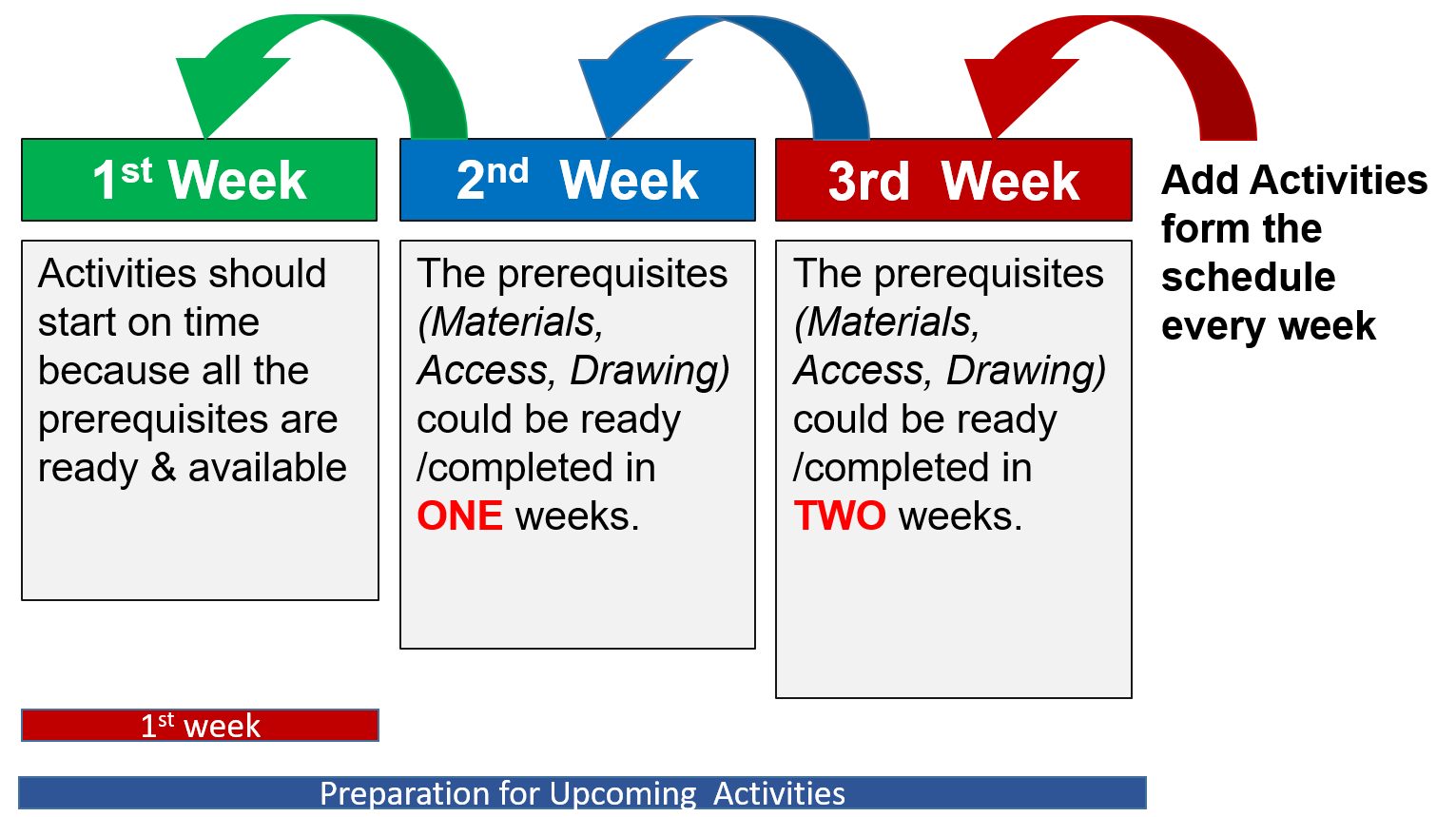
The Parallel Layer Concept
As the above process chart illustrates, a successful Look Ahead works in two distinct layers running in parallel:
Layer 1: Current week’s activities (Execution & Monitoring).
Layer 2: Upcoming activities (Preparation & Readiness Checks).
Correct implementation results in massive improvements in production rates, date recovery, and significant cost savings.
Discussion
No comments yet. Be the first to share an insight.
Leave a Comment