Failure in Interface management of construction projects could cause significant cost overrun, delay and easily collapse any multi-contracting project. Herein is an example of what we once witnessed.
On a multi-billion dollar project, we received an urgent request to develop a new Integrated Baseline Schedule for a multi-billion dollars’ Project in one week only (is it feasible?!). On the 1st site visit, we were invited to a meeting to observe how the weekly progress meetings are running. Surprisingly, In the meeting both client/PMC and contractor had their lawyers and senior contract managers present. But why were the lawyers present in the weekly progress meeting? We soon found out, why?
It was a multi-contract Project and the PMC was responsible for developing the Integrated Master Schedule (IMS). When the IMS was developed, the PMC team were assuming that it will be a simple high Level Schedule to report the Project’s status to the Client. There were no thought processes for interface management. In early days of the Project there were no issues with interface management because mainly civil works were in progress!
The "Lawyers in the Meeting" Phenomenon
"During MEIP installation, interface management became a monster. Contractors exploited logic gaps to make claims, and nobody could provide a reliable date for when a work area would actually be available". his was the reason for having lawyers in the progress review meetings!
After our findings report, the PMC contracted 2 consultants to develop a new IMS. The 1st one was so called global leading project management consultant and 2nd one was a local leading consultant!! After 9 months both these leading consultants failed especially the 1st one who claimed that they developed 87% healthy schedule! But when we deleted the 2 placeholder milestones, most of the activities sat on the data date!
4 Common IMS Practices
Understanding the pitfalls of standard scheduling approaches.
1. The EPS Copy Method
The planner, copies all the schedule in one EPS or one file. Then opens them together. No or only few links among the schedules (very simple and easy)!! For updating, the updated schedules get copied in a new EPS / file. Or the planner tries to update them automatically!
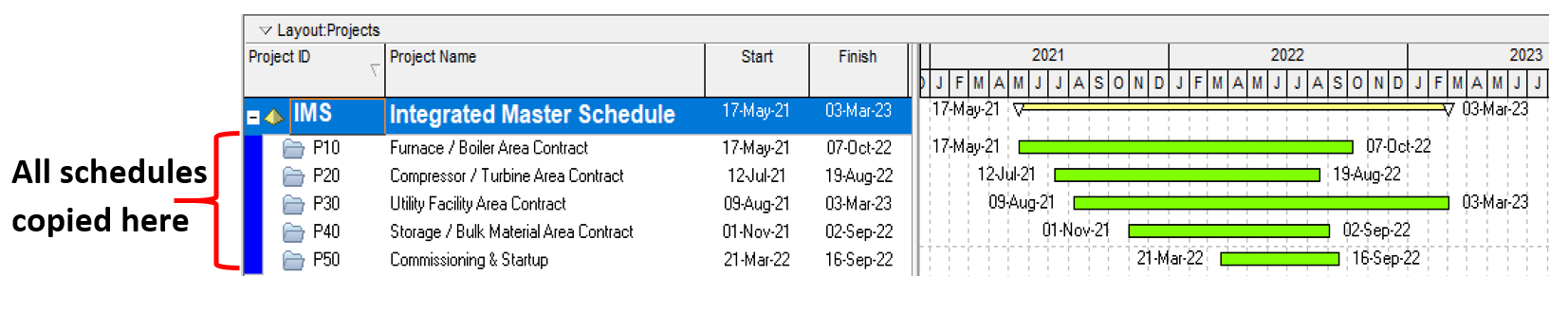
2. Non-Systematic Linking
This one is almost same as the No.1 but the planner tries to add more links among the schedules. The process of adding more links could take several weeks but generally it does not get done systematically. Therefore, for every update, the planner has no choice either update automatically or redo the linking again and again!
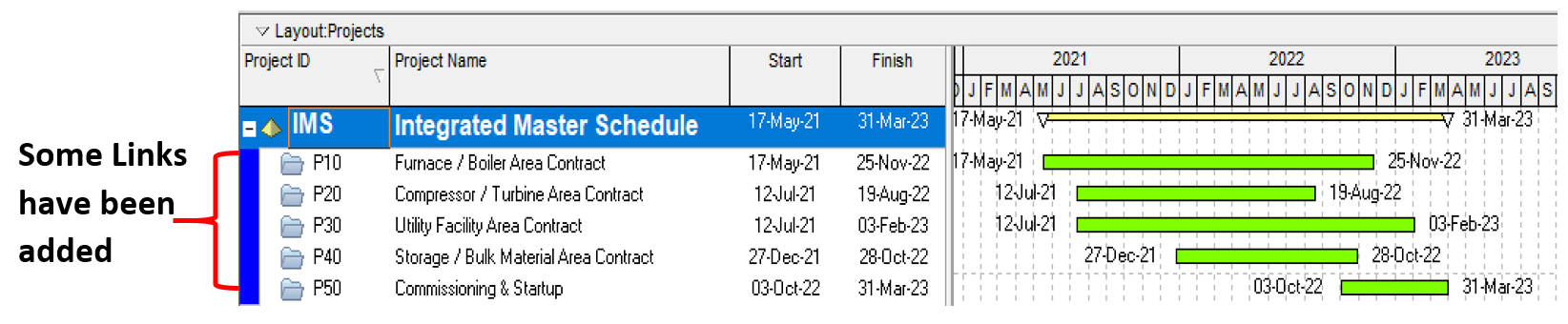
3. High-Level Manual Reporting
The planner develops a separate higher level schedule. Activities in the high level schedule, corresponds with the detailed contractors schedule.
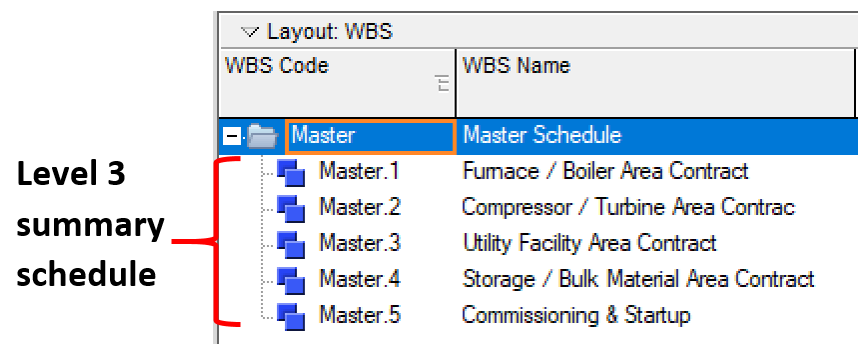
4. Milestone-Driven Linking
The planner creates a Milestone schedule then links the activities through this schedule. Updating is still a challenge either could be done automatically or manually. For manual update, multiple planners would be required.

Discussion
No comments yet. Be the first to share an insight.
Leave a Comment