Sometimes during discussions on Weight Value, most people immediately jump to the conclusion that Man-Hours, Cost, etc. must be used. On some Projects, man-hours could be applicable whilst on others Cost. However, for other projects, it could be another factor. It is clear that one factor would not be applicable to all projects. The project’s scope of work, the purpose of PMS, interface with other project control components, etc. must be considered during the weight value calculations.
In the following example, we will illustrate the importance of the weight value. Example, there is an EPC project with the contractual value of $50 million. The contractor’s invoice will be paid as per the earned progress. The progress of the EPC at a certain stage is as follows:
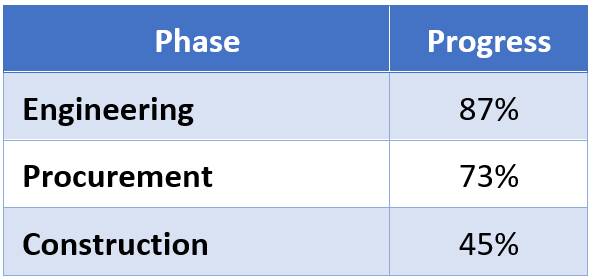
The overall project’s progress has been calculated using three (3) different weight values:
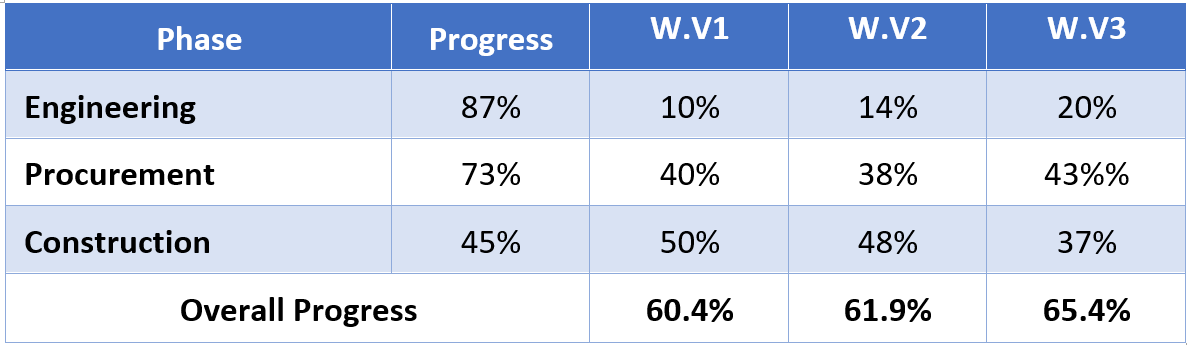
The calculated overall project’s progresses are not the same due to weight value differences. As a result, the invoice value will not be the same. The invoice values based on each weight values are as follows:
- Invoice 1: $30.20 million
- Invoice 2: $30.97 million
- Invoice 3: $32.72 million
The data source for most capital projects must be a Resource Loaded Schedule.
It is clear that any mistakes, miscalculations or incorrect criteria could have a massive impact on the company’s cash flow and capacity to deliver the project. So, for the calculation of the weight value, one cannot jump to the immediate conclusion and use man-hours, cost, etc.
To know more about PMS and the training
Reach out to us for expert guidance on Progress Measurement System implementation.
Contact Us: info@khonopc.com
Discussion
No comments yet. Be the first to share an insight.
Leave a Comment