What Should a Client Check?
Generally, project contracts include a clause for Baseline Schedule development and submission. But what exactly should the Client be looking for during the review?
- Contractual dates
- Client deliverables & interfaces
- Turn-around durations
- Schedule integrity (Calendars, Settings, CPM compliance)
- Activity IDs, Names, and Codes
- Full Scope of Work coverage
Valid Areas for Client Commentary
The Client rejects the Schedule when they find issues. Then the contractor incorporates the client’s comment in the schedule and re-submits it! Can a client comment on the following items:
- Activity Durations: Yes, specifically for turnaround times and procurement lead times.
- Sequence of Activities: Yes, if there are concerns regarding execution plans, constructability, accessibility, or safety.
- Resource Count: Yes, if there is a contractual agreement on staffing levels or if loading was done incorrectly.
- S-Curve Shape: Yes, if the curve is heavily front/back loaded or flattens significantly during key periods.

Issues Identified Post-Approval
After some back and forth and incorporating the comments the schedule gets approved (accepted) as Baseline. During execution, if either side picks up some serious issues on the Schedule, what will be the client's responsibility? Some of the issues could be as follows:
1. Contractual dates captured incorrectly:

2. Client’s turnaround duration is incorrect:
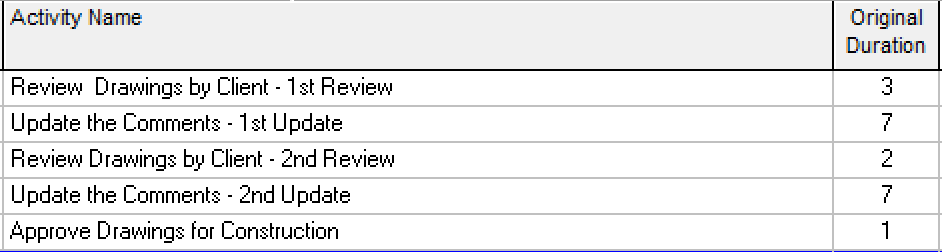
Other critical issues often found include:
- Some portion of the scope of work (deliverable) is missing
- Some sequence of the activities is incorrect
- Settings are incorrect
- Resource/ cost loading is incorrect
- Duration of some of the activities are not adequate to complete the activity scope of work
- Some safety concern has not been considered
- Constructability and / or accessibility of some activities have not been considered!
The schedule was reviewed and accepted by the client. What is the client's responsibility for the above mentioned issues?
Option 1: No Responsibility
Client does not take any responsibility. Therefore, the contractor has to deal with all the issues and continue with incorrect schedule!
Option 2: Shared Responsibility
Client does take some responsibility and might grant the re-baselining (highly unlikely!)
"If the Client takes no responsibility for errors and issues, then why should the schedule be reviewed and approved by them in the first place?"
Discussion
No comments yet. Be the first to share an insight.
Leave a Comment