The Confusion of Units
In the world of Resource Loading, there seems to be no limit to incorrect procedures. Many planners inadvertently mix **man-hours** with **man-days**, or **working hours** with **productive hours**. Worse yet, some ignore productive hours entirely, assuming that resources remain 100% efficient from the moment they clock in until they clock out.
While project managers and construction leads often emphasize that daily commodities must be planned based on productive hours, the schedule often fails to reflect this reality.
Core Concepts & Definitions
- 1. Budgeted Units To load resources on construction activities, budgeted units should be calculated based on the quantity and the norm, then assigned. The budgeted unit is the man-hour for labor and non-labor.
- 2. Working Hours This is the total time a resource spends on the project site. Generally, the hours in the project’s software calendar are set to match these working hours.
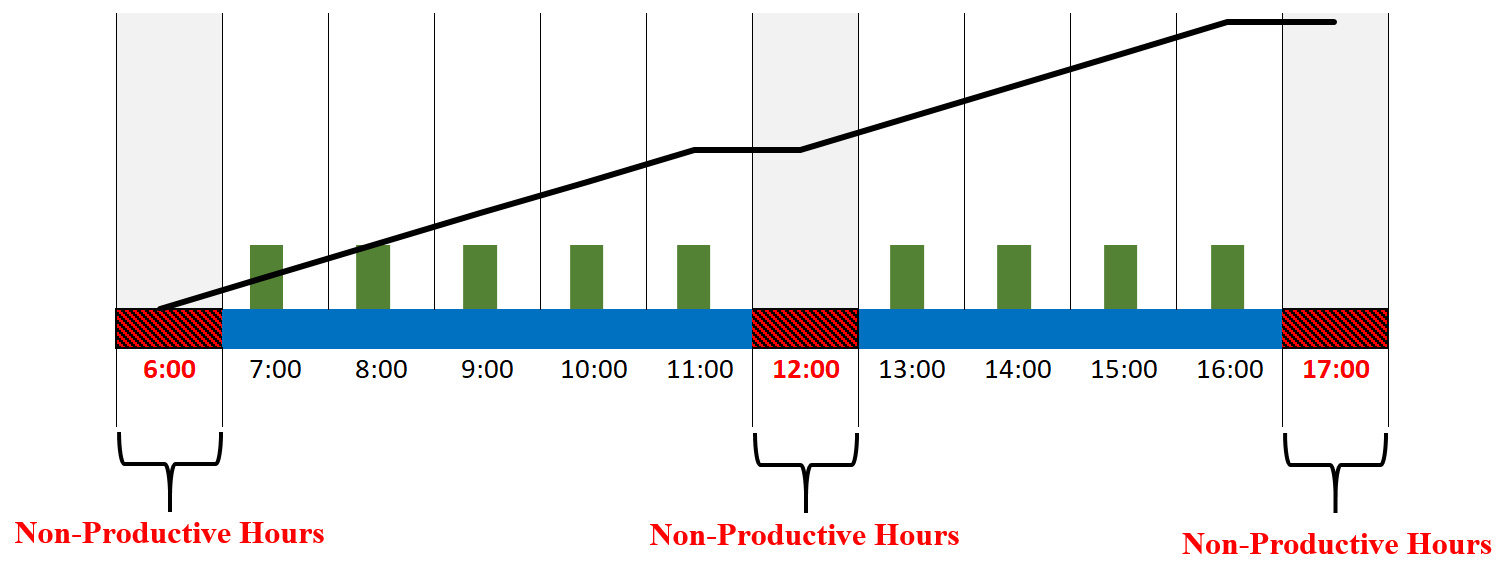
- 3. Productive Hours These are the specific hours spent producing a tangible output. This excludes "Non-Productive" essentials like toolbox talks, lunch breaks, cleaning up, and returning tools to the store.
Case Study: The 24m vs. 18m Paradox
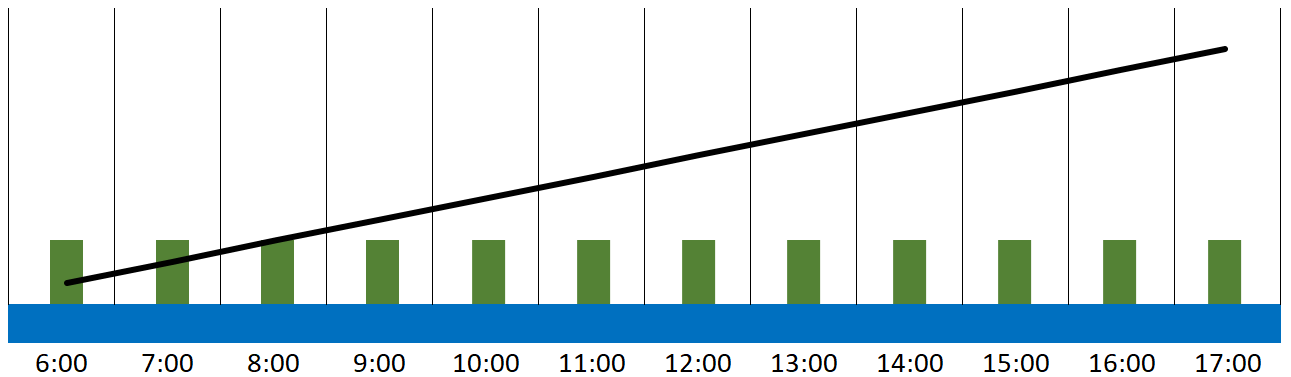
To demonstrate the concepts, consider a labor resource for cable laying with an expected production rate of 2m per hour. The site working hours are from 6 AM to 6 PM (12 hours).
Scenario A: Exclude Non-Productive Hours. If non-productive hours are ignored, the math suggests the resource will lay cable for the full 12 hours. As illustrated below, the expectation is 24m of cable by the end of the day.
Scenario B: Include Non-Productive Hours. Because the resource does not lay cable during toolbox talks or breaks, the productive window shrinks. The actual output is only 18m.
Why the "Man-Day" Argument Fails
So, at the end of the day, there is a shortfall of 6m. what will happen to this shortfall? What will happen to the duration of the activities? Some planners argue that they plan per day and the norm is per day (Man-Day) and the resource should produce the 24m regardless of hours spent. This argument is incorrect because:
1. Variable Ratios
The production in a 10-hour day will never be the same as a 12-hour or 8-hour day. Output is a function of time.2. Safety & Regulations
You cannot simply "work extra" to cover shortfalls indefinitely. Labor laws and safety rules (e.g., RT evacuation requirements) strictly limit available work windows.The Correct Loading Procedure
If resource loading is done purely by Man-Day rates without verifying hourly logic, your output will be wrong. To fix this:
- 1- Activity Duration must be based on Productive Hours.
- 2- Resource Assignment must be based on Working Hours (because that is what the resource is paid for).
- 3- Never assign a "Man-Day" as a "Man-Hour" in your scheduling software.
Discussion
Good research, but like to get an example of calculated productivity showing output and input
Hi Asiimwe, thanks for the comment. To learn the resource loading, we recommend to take our training course. You can find ore detail here: https://khonopc.com/services/training/
Or you could purchase our Resource Loading book, here: https://khonopc.com/product/schedule-resource-loading-guideline-book/
buenos dias, excellent blog on lardaceous loss. this helped.
Leave a Comment